

Composite Bonding in Turkey:Planning, Cost and What It Can and Cannot Do
Composite bonding builds tooth-coloured resin onto the surface of a tooth to change its shape, close a small gap, rebuild a chipped edge or even out proportions. It is additive: in most cases no healthy enamel is removed, which is the main reason it is often the reversible option when a patient is not certain about committing to veneers or crowns.
It is also the shorter-lived option. With care, bonding typically lasts around five to seven years before it needs refreshing, against considerably longer for well-planned ceramic work. That trade-off is the whole decision, and a clinic that does not raise it is not helping you make it. A licensed dentist at a partner clinic assesses whether bonding suits your case at all, and which teeth should be included.
Smile Center Health coordinates the journey around that assessment: gathering the photographs and records the clinic needs, arranging the appointment and supporting the practical side of a short visit. The clinical decisions stay with the treating clinician.
What Composite Bonding Involves, and Who It Suits
The dentist applies a composite resin directly to the tooth, sculpts it to the agreed shape and hardens it with a curing light, then polishes the surface. Each tooth takes roughly 30 to 60 minutes, so a case covering the visible upper and lower teeth is usually completed in a single appointment of one to three hours rather than across multiple visits.
It is commonly discussed for chipped or worn edges, small gaps, teeth that look uneven in proportion, and surface staining that whitening alone has not resolved. It is less suited to heavily restored teeth, significant bite problems, or cases where the underlying alignment is the actual concern; those may need orthodontic input or a different restoration entirely. Active decay or gum problems are treated before any cosmetic work is considered.
Because the treatment is additive, it is usually reversible and it is repairable. A chipped edge can generally be repaired in place rather than replaced wholesale, which matters for an international patient: a small repair does not necessarily mean another flight.
Bonding, Veneers or Crowns: Which Question Are You Actually Asking?
These are different answers to different problems, not three grades of the same product. The comparison below is for orientation before your consultation; which one suits your case is a clinical judgement made by the treating dentist after an examination.
Composite Bonding
- Additive: usually no healthy enamel removed
- Normally one appointment, 1-3 hours
- Around 5-7 years with care, then refreshed
- Repairable in place if an edge chips
- Often the reversible way to try a change
Veneers
- Usually involves preparing the tooth surface
- Laboratory-made, so more than one appointment
- Longer-lasting than bonding when well planned
- Replaced rather than repaired if damaged
- Discussed for wider changes in shape and shade
Zirconia Crowns
- Covers the whole tooth rather than the front surface
- Considered where a tooth needs structural support
- More preparation than veneers
- A restorative decision before a cosmetic one
- Assessed case by case, not chosen by preference
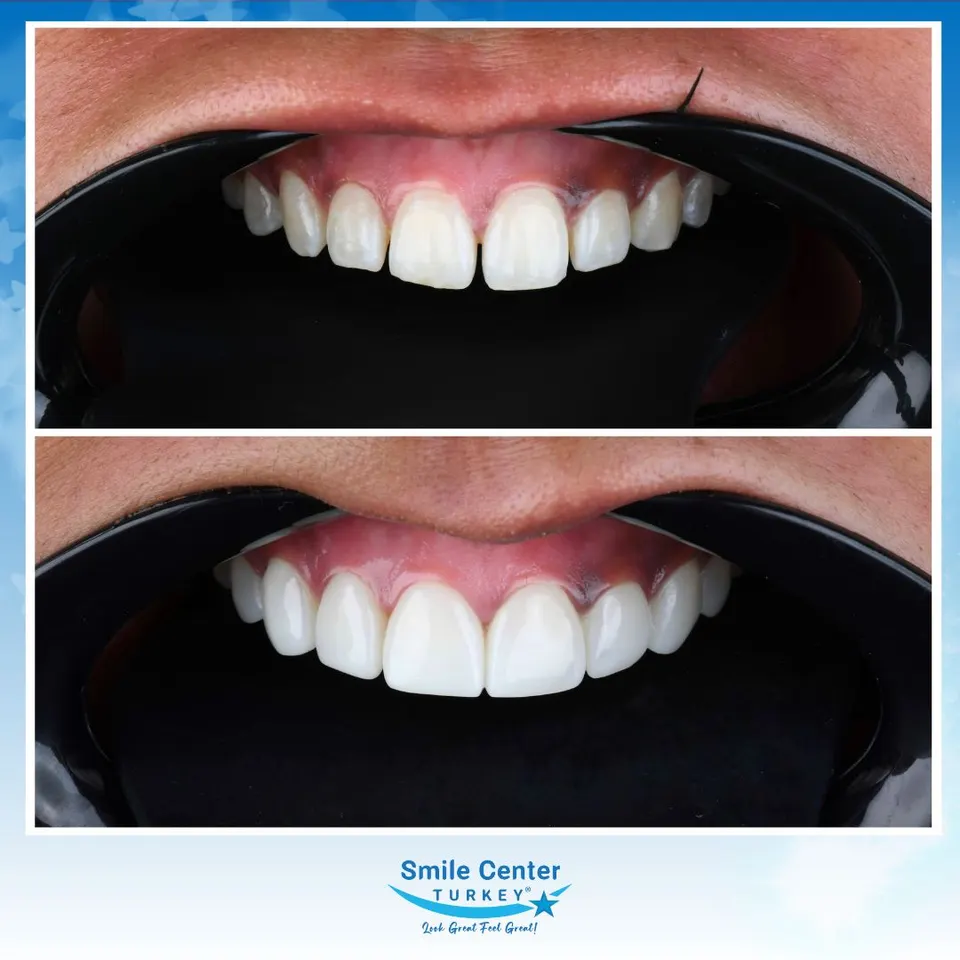
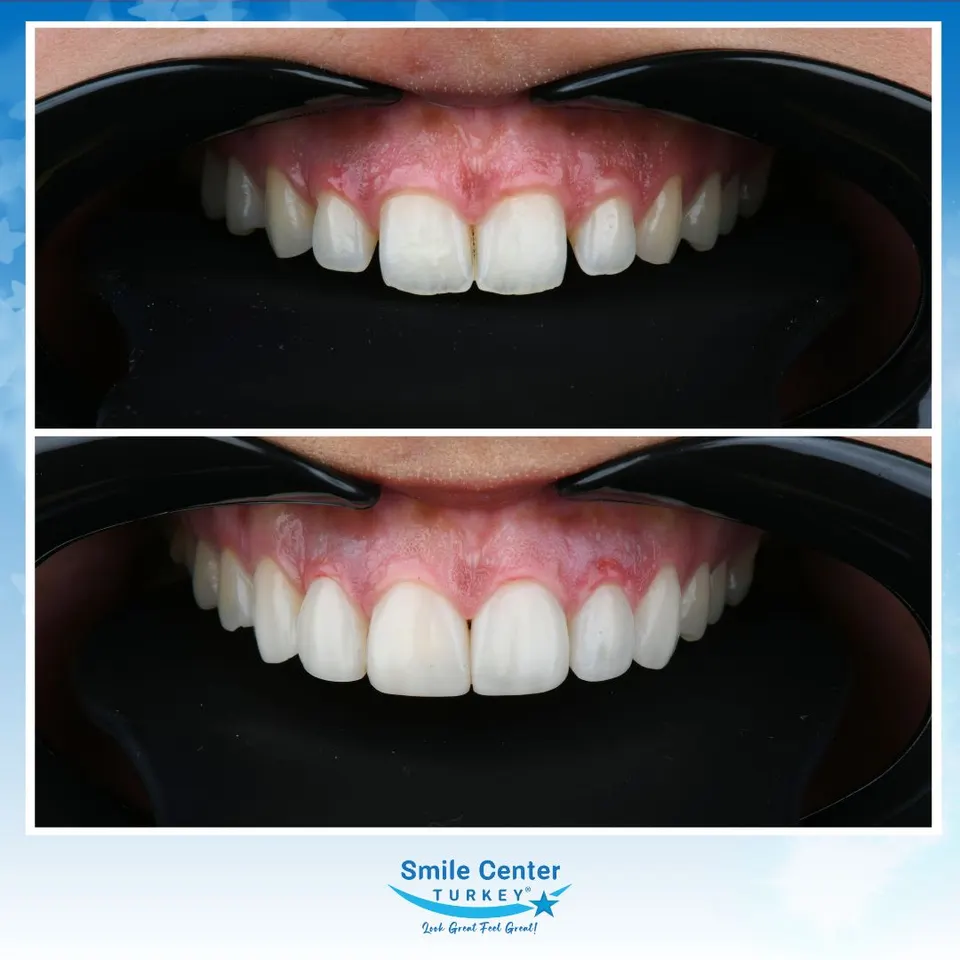
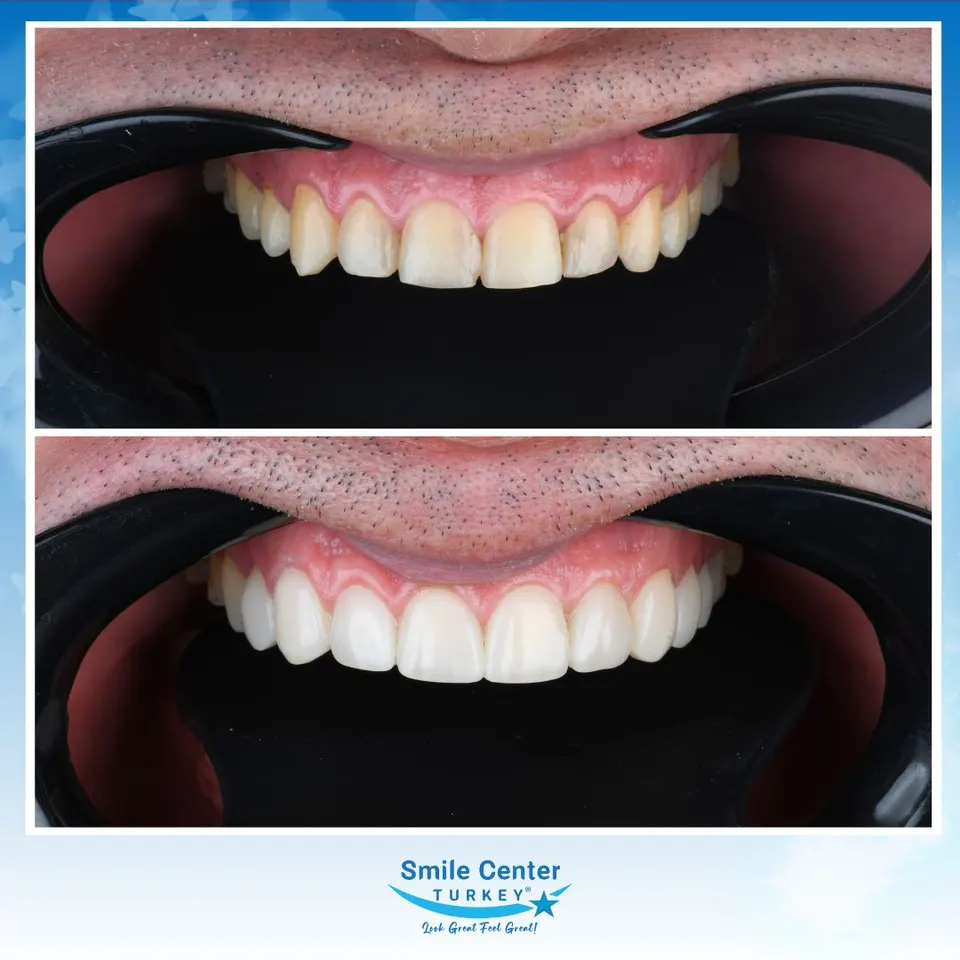
Before / After Examples
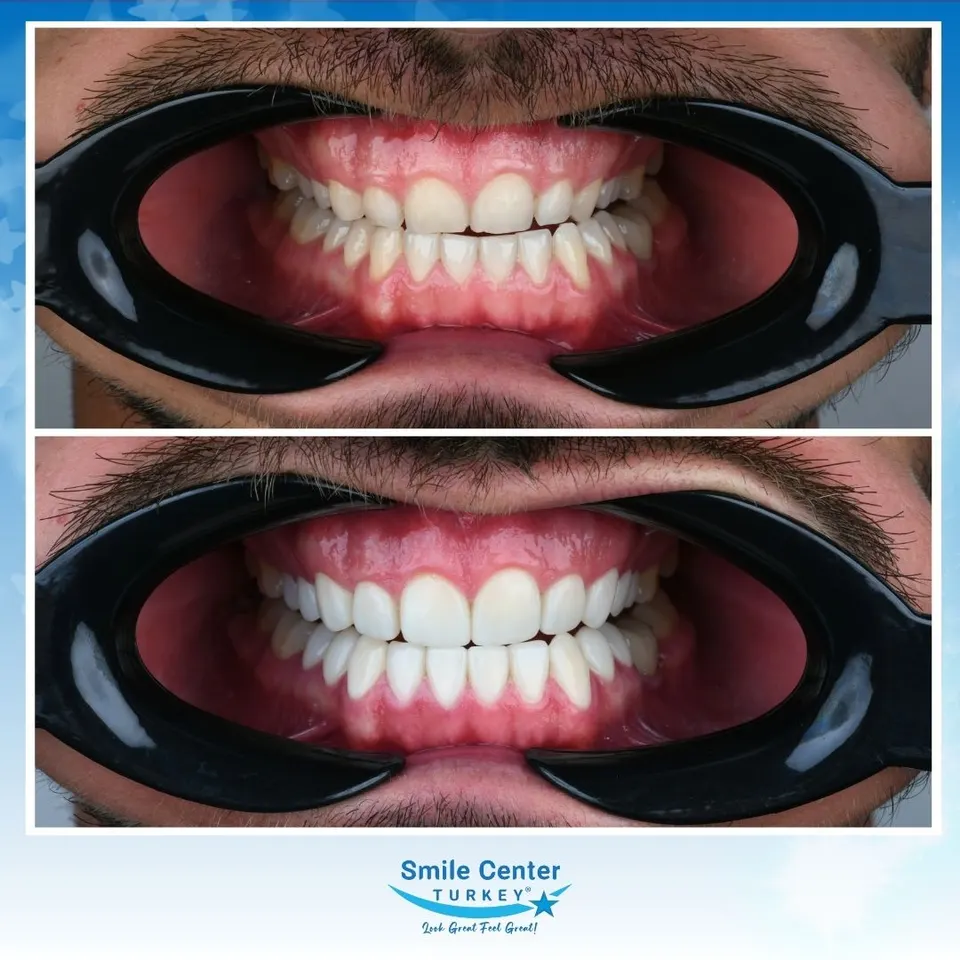
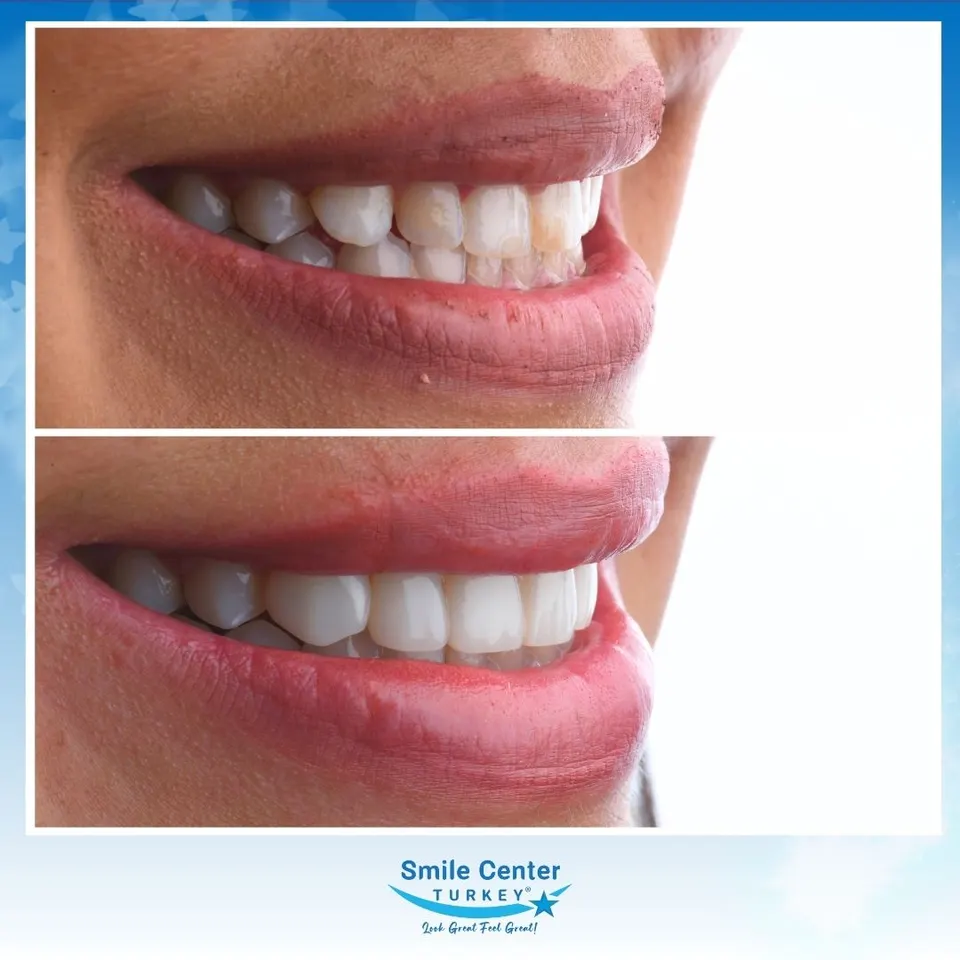
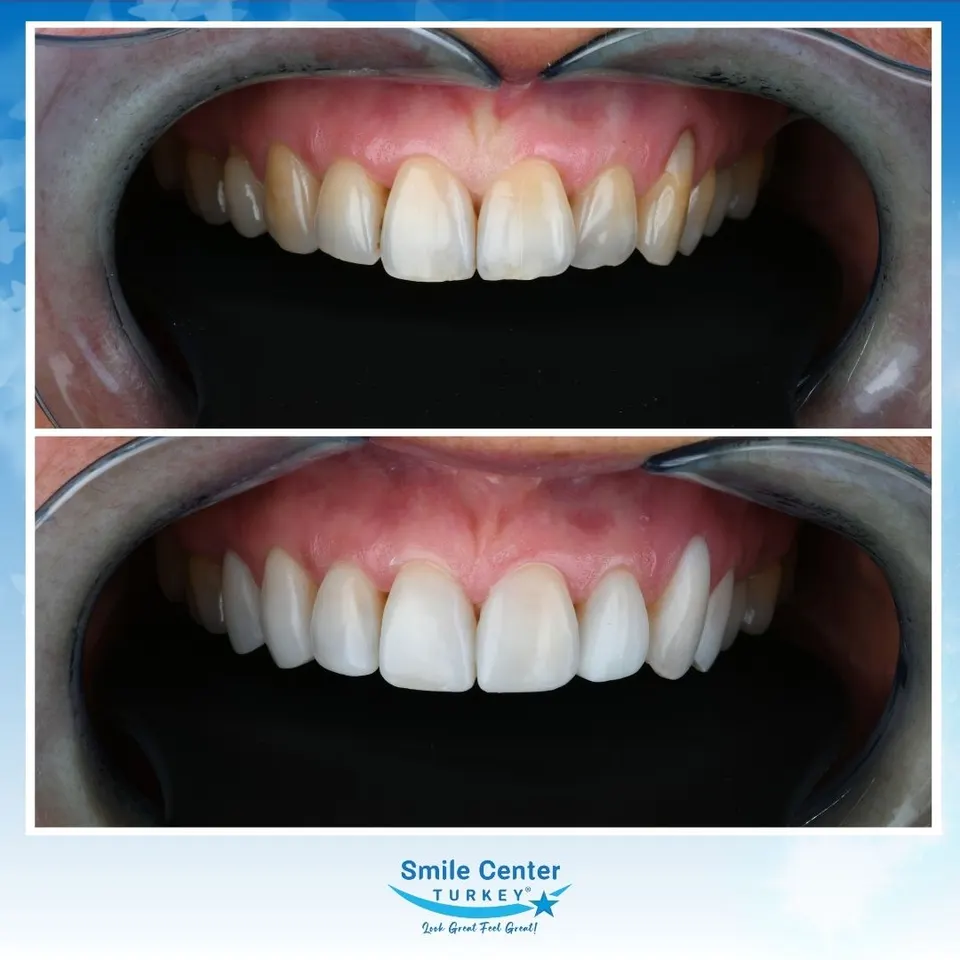
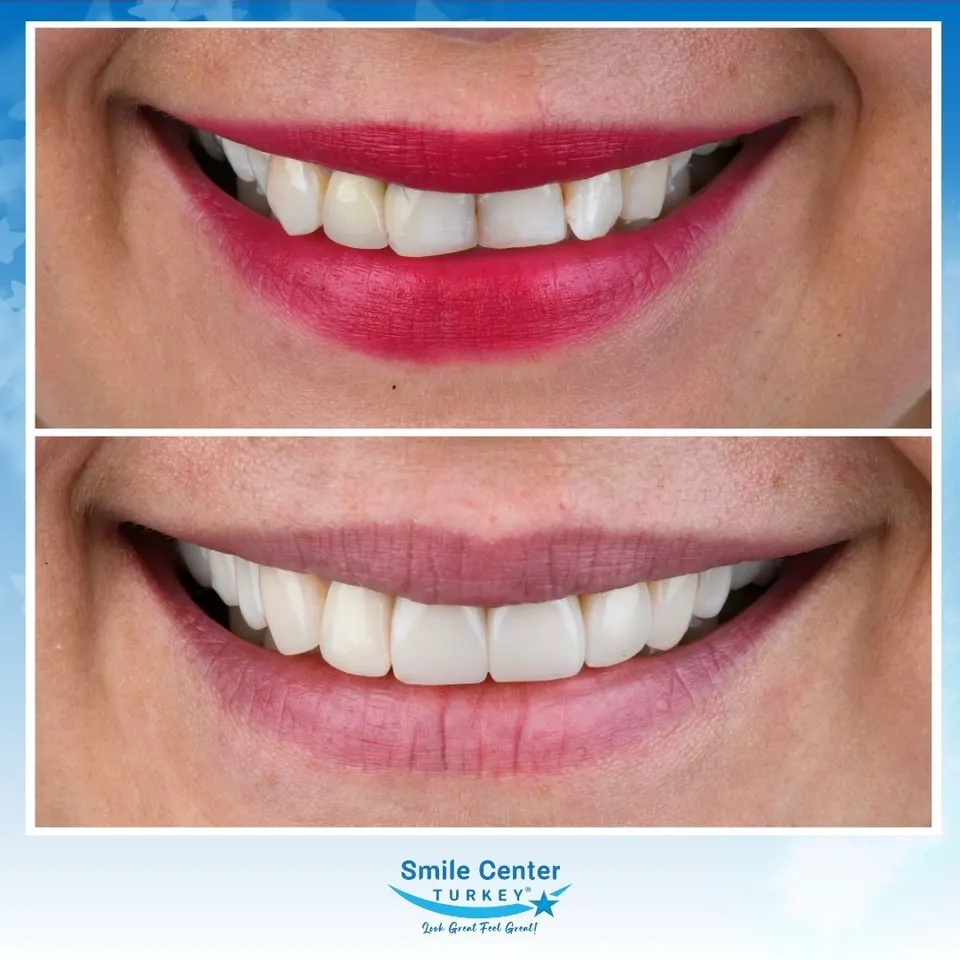
Composite bonding cases carried out at Smile Center Turkey, our partner clinic in Antalya. Individual results depend on the starting condition of the teeth and the plan agreed with the treating dentist; these are examples, not a predicted outcome for your case.
What Drives the Cost of a Composite Bonding Case
Bonding is quoted per tooth, which makes single-tooth prices a poor guide to what a case costs. A full cosmetic case covering the visible upper and lower teeth is commonly around 16 teeth, so it is worth thinking in cases rather than per-tooth figures when comparing quotes. A written quotation comes from the clinic after assessment.
- How many teeth are included
- The condition of each tooth
- Preparatory care
- Travel and stay
Indicative guide at our partner clinic: GBP 110-120 per tooth. Your quotation depends on the number of teeth, the condition of each one and any preparatory care the dentist considers necessary.
What to Bring, and What to Take Home
Bonding is quick to place, which makes the paperwork around it easy to neglect. These are the things worth having before you fly and worth leaving with.
How Smile Center Health Supports Your Treatment Journey
Treatment is carried out by licensed clinicians at appropriately authorised partner clinics in Turkey. Smile Center Health coordinates the journey around it: collecting the photographs and records the clinic needs, arranging the consultation pathway, helping you understand the schedule the clinic proposes, and supporting the practical arrangements for a short visit.
Assessment, diagnosis, suitability decisions, informed consent, material recommendations and clinical care remain with the treating clinic. A remote review helps the clinic understand your goals and identify what it still needs, but recommendations can change after an in-person examination. You should receive the clinic's treatment plan, quotation, consent information and aftercare guidance in a form you can read and keep.
Verify Before You Decide
Cosmetic dentistry abroad is worth checking rather than trusting. Independent guidance exists for exactly this, and reading it before your consultation makes the consultation more useful.